Category Archives: in vitro or lab studies

Ganeshpurkar 2017: The Pharmacological Potential of Rutin

This gallery contains 4 photos.

Saudi Pharmaceutical Journal. 25, 149-164.  Ganeshpurkar & Saluja.  This is a comprehensive review of Rutin — a natural-source pharmaceutical that has an almost unbelievable profile of benefits.  It is found in many sources, including passion flowers, apples, and buckwheat (kasha). … Continue reading →

More Galleries | Leave a comment

Garcia-Cremades 2020: Full text Optimizing hydroxychloroquine dosing for patients with COVID-19: An integrative modeling approach for effective drug repurposing

This gallery contains 2 photos.

Clinical Pharmacology & Therapeutics. 2020 Aug;108(2):253-263. Garcia-Cremades, Solans, Hughes . . . & Savic Using pharmacokinetics integrated with in vitro data, the authors are attempting to define the best dose for HCQ both for treatment and for clinical trials, while avoiding … Continue reading →

More Galleries | Leave a comment

Augustine 1980: Neurotransmitter Release from a Vertebrate Neuromuscular Synapse Affected by a Food Dye

This gallery contains 1 photo.

Science. 207(4438):  1489-90. Red 3 was applied to nerve synapses in the frog, producing an irreversible, dose-dependent increase in neurotransmitter release. The author suggested this may be useful for studying neurotransmitters, but that the use of Red 3 as a … Continue reading →

More Galleries | Leave a comment

El-Desoky 2017: Curcumin Protects Against Tartrazine-Mediated Oxidative Stress and Hepatotoxicity in Male Rats

This gallery contains 2 photos.

European Review for Medical & Pharmacological Sciences. (21): 635-645. El-Desoky, Abdel-Ghaffar, Al-Othman … About-Soud Curcumin (an extract of turmeric) was studied to see if it could protect against the kidney and liver damage expected from the ADI of Tartrazine (Yellow 5) … Continue reading →
More Galleries | Leave a comment

Al-Seeni 2018: Nigella Sativa Oil Protects Against Tartrazine Toxicity in Male Rats.

This gallery contains 2 photos.

Toxicology Reports. 5: 146-155. This was not a test of tartrazine (Yellow 5) – they already knew it would be toxic.  Rats in the “positive control” group (given Yellow 5) had elevated liver enzymes, cholesterol and triglycerides, as well as … Continue reading →
More Galleries | Leave a comment

Leo 2018: Occurrence of Azo Food Dyes and their Effects on Cellular Inflammatory Responses

This gallery contains 2 photos.

Nutrition. 2018 February. 46:36-40 This study found that 11.54% of the 1,681 processed items examined in a local supermarket in Singapore contained at least one of five food dyes — of which tartrazine (Yellow 5), sunset yellow (Yellow 6), and … Continue reading →

More Galleries | Leave a comment

Dixit 2013: All India survey for analyses of colors in sweets and savories: Exposure risk in Indian population

This gallery contains 2 photos.

Journal of Food Science. 2013 April; 78(4): T642-7.  Dixit, Khanna & Das This is the first national study on food additive use in India, collecting data on “sweets and savories.” Their dye extraction and identification technique (using pure wool strands) … Continue reading →
More Galleries | Leave a comment

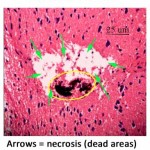
Ze 2014: Neurotoxicity and gene-expressed profile in brain-injured mice caused by exposure to titanium dioxide nanoparticles

This gallery contains 3 photos.

Journal of Biomedical Materials Research Part A. 2014 Feb; 102(2): 470-8. Titanium dioxide is a naturally occurring white powder approved by the FDA.  It is used as a white coloring in many products we use every day such as toothpaste, … Continue reading →
More Galleries | Leave a comment

Stevens 2015: Amounts of artificial food dyes and added sugars in foods and sweets commonly consumed by children

This gallery contains 1 photo.

Clinical Pediatrics, 2015 Apr;54(4):309-21, e-published April 24, 2014 Numerous foods and candies were purchased from local stores and processed to measure the amount of food dyes actually in them. Several comprehensive tables provide the details, but below is a sample: Some … Continue reading →

More Galleries | Leave a comment

Stevenson 2010: The Role of Histamine Degradation Gene Polymorphisms in Moderating the Effects of Food Additives on Children’s ADHD Symptoms

This gallery contains 1 photo.

American Journal of Psychiatry. 2010 Sep;167(9): 1108-15 Stevenson analyzed the reactions of children in the McCann (2007) study to see why not all children react to additives in the same way.  He found that variation in several genes that control … Continue reading →
More Galleries | Leave a comment

Lau 2006: Synergistic Interactions Between Commonly Used Food Additives in a Developmental Neurotoxicity Test

This gallery contains 3 photos.

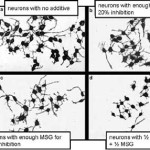
Toxicological Sciences. 2006 Mar; 90(1):178-87. This is one of the few studies examining and comparing the neurotoxic activity of food additives alone and in combination.   After determining how much of each additive reduces neurite development by 20%, Lau combined pairs … Continue reading →
More Galleries | Leave a comment