Category Archives: Hyperactivity

Goldenring 1982: Sulfanilic acid: behavioral change related to azo food dyes in developing rats

This gallery contains 1 photo.

Neurobehavioral Toxicology and Teratology, 1982. Jan-Feb;4(1): 43-9. Goldenring, Batter & Shaywitz Goldenring studied the effects of giving sulfanilic acid to rat pups.  He chose this chemical because it is formed when azo food dyes are digested.  He gave the sulfanilic acid … Continue reading →

More Galleries | Leave a comment

Salamy 1982: Physiological changes in hyperactive children following the ingestion of food additives

This gallery contains 2 photos.

International Journal of Neuroscience, 1982. May;16(3-4):241-246 QUOTE:  “… The physiological measures [EEG and heart rate] were obtained prior to and following the ingestion of drinks containing food additives or placebos, which were administered in a double-blind, randomized, crossover procedure. … … Continue reading →

More Galleries | Leave a comment

Swanson 1980: Food Dyes Impair Performance of Hyperactive Children on a Laboratory Learning Test

This gallery contains 2 photos.

Science, March 28, 1980, Vol. 207. pp.1485-7 QUOTE:  “The performance of the hyperactive children on paired-associate learning tests on the day they received the dye blend was impaired relative to their performance after they received the placebo, but the performance … Continue reading →

More Galleries | Leave a comment

Weiss 1980: Behavioral responses to artificial food colors

This gallery contains 1 photo.

Science, 1980. March 28;207 (4438): 1487-9. QUOTE:  ”Twenty-two young children, maintained on a diet that excluded certain foods, were challenged intermittently with a blend of seven artificial colors in a double-blind trial. Parents’ observations provided the criteria of response. One … Continue reading →

More Galleries | Leave a comment

Brenner 1979: Trace mineral levels in hyperactive children responding to the Feingold diet

This gallery contains 2 photos.

The Journal of Pediatrics. 1979. June; 94(6):944-5 Trying to find a reason why some children respond well to the Feingold Diet and others don’t, Brenner measured copper and zinc levels in the blood of 20 children who had responded well … Continue reading →

More Galleries | Leave a comment

Feingold 1979: Dietary management of juvenile delinquency

This gallery contains 2 photos.

International Journal of Offender Therapy and Comparative Criminology, 1979. Vol 23(1) 73-84. QUOTE:  “This disenchantment with present-day rehabilitation techniques prompted the Ford Foundation in its annual report for 1977 to recommend that the role in delinquency of biochemical and organic … Continue reading →

More Galleries | Leave a comment

Lafferman 1979: Erythrosin B inhibits dopamine transport in rat caudate synaptosomes.

This gallery contains 2 photos.

Science. 1979. July 27; 205 (4404): 410-2. Lafferman found that erythrosin B [Red 3] given to rats prevents the uptake of dopamine (the “feel good” neurotransmitter) by nerve cells in the brain called the caudate synaptosomes.  This is consistent with … Continue reading →

More Galleries | Leave a comment

Shaywitz 1979: Effects of chronic administration of food colorings on activity levels and cognitive performance in developing rat pups treated with 6-hydroxydopamine

This gallery contains 2 photos.

Neurobehavioral Toxicology, 1979.  Spring;1(1):41-7.  (Today called Neurotoxicology and Teratology) In a study on rat pups, the highest dose of food dyes caused the greatest activity.  Even after a half hour, the pups only calmed down by 7.25% — while the … Continue reading →

More Galleries | Leave a comment

Dumbrell 1978: Is the Australian version of the Feingold diet safe?

This gallery contains 1 photo.

Medical Journal of Australia, 1978 Dec 2;2(12):548, 569-70. Dumbrell, Woodhill, Mackie & Leelarthaepin The Feingold diet, as used in Australia, was found to be nutritionally superior to a “normal” diet, and pronounced safe to use. MedLine

More Galleries | Leave a comment

Goyette 1978: Effects of artificial colors on hyperkinetic children: a double-blind challenge study

This gallery contains 2 photos.

Psychopharmacology Bulletin, 1978. April;  14(2):39-40.    Goyette, Conners, Petti, & Curtis Goyette et al performed two studies: Experiment One:  16 children were put on the diet and were much improved according to both parents and teachers.  Then they were challenged … Continue reading →

More Galleries | Leave a comment

Harley 1978: Hyperkinesis and food additives: testing the Feingold hypothesis

This gallery contains 2 photos.

Pediatrics, 1978. Jun;61(6):818-28 In a double-blind diet study in which all food was provided for a “Feingold Diet” and a “control diet,” parents of 63% of the 36 school-age children and 100% of the 10 preschool children reported improved behavior … Continue reading →

More Galleries | Leave a comment

Hindle 1978: The management of hyperkinetic children: a trial of dietary therapy

This gallery contains 2 photos.

New Zealand Medical Journal, 1978. Jul 26;88(616):43-5. QUOTE:  “Ten hyperkinetic children have been treated with the [Feingold] diet, five of whom improved dramatically and are now off all other therapy. Their response to accidental and deliberate challenge supports the hypothesis … Continue reading →

More Galleries | Leave a comment

Levy 1978: Hyperkinesis and diet: a double-blind crossover trial with a tartrazine challenge

This gallery contains 1 photo.

Medical Journal of Australia, 1978. Jan 28;1(2):61-4 In this double-blind study of 22 hyperactive children, Levy put them on an elimination diet for four weeks and then challenged them with Yellow 5.  She reported that their improvement in the first … Continue reading →
More Galleries | Leave a comment

Rose 1978: The functional relationship between artificial food colors and hyperactivity.

This gallery contains 2 photos.

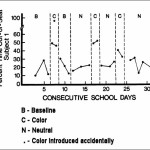
Journal of Applied Behavior Analysis 1978 Winter; 11(4):439-46 This was a double-blind study on two girls who had been on the Feingold diet for almost a year. Trained observers watched them in school and reported on the frequency of the … Continue reading →

More Galleries | Leave a comment

Williams 1978: Relative effects of drugs and diet on hyperactive behaviors: an experimental study

This gallery contains 1 photo.

Pediatrics. 1978 Jun;61(6):811-7. 26 hyperactive children were given a “modified” Feingold diet in which artificial food dyes and flavorings were eliminated, but not preservatives or salicylates.    They were then challenged in four ways: Cookie with 13 mg food dyes + … Continue reading →

More Galleries | Leave a comment

Brenner 1977: A study of the efficacy of the Feingold diet on hyperkinetic children. Some favorable personal observations.

This gallery contains 2 photos.

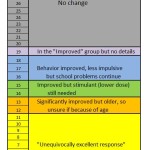
Clinical Pediatrics (Phila) 1977 Jul;16(7):652-6 (Case studies) When 32 hyperactive children Dr. Brenner had been treating medically for years were given the Feingold diet, 11 of them — 34.3% —  “markedly improved.“  Another 2 improved as much but were older, … Continue reading →

More Galleries | Leave a comment

Feingold 1977: Food additives in dentistry

This gallery contains 2 photos.

Journal of the American Society for Preventive Dentistry, 1977 Jan-Feb;7(1):13-5. QUOTE:   “The presence of food additives in products used in dental procedures may have serious consequences for many patients. Hyperactivity and learning disabilities as well as buccal, gingival and … Continue reading →
More Galleries | Leave a comment

Feingold 1977: Hyperkinesis and Learning Disabilities Linked to the Ingestion of Artificial Food Colors and Flavors

This gallery contains 2 photos.

Speech to American Academy of Pediatrics, New York Hilton Hotel, November 8, 1977. QUOTE:  ”Recognizing that any compound under the appropriate conditions can induce adverse reactions, including behavioral disturbances, it becomes necessary to evaluate each compound or class of compounds … Continue reading →
More Galleries | Leave a comment

Conners 1976: Food additives and hyperkinesis: a controlled double-blind experiment

This gallery contains 1 photo.

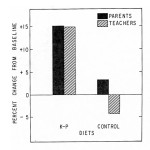
Pediatrics,  1976 Aug;58(2):154-66. Conners, Goyette … Andrulonis In a double-blind crossover study, 15 children were given a control diet and the “K-P” (Feingold) diet eliminating artificial flavors, colors, and natural salicylates. QUOTE:  “Both parents and teachers reported fewer hyperkinetic symptoms … Continue reading →

More Galleries | Leave a comment

Cook 1976: The Feingold dietary treatment of the hyperkinetic syndrome

This gallery contains 1 photo.

Medical Journal of Australia. 1976 Jul 17;2(3):85-8, 90.   Cook & Woodhill In Australia, 15 children were given the Feingold diet.  Parents of 13 of them (87%) reported improvement in their children’s behavior and a relapse upon eating off-diet items. MedLine|| … Continue reading →
More Galleries | Leave a comment

Spring 1976: Food Additives and Hyperkinesia: A Critical Evaluation of the Evidence

This gallery contains 2 photos.

Journal of Learning Disabilities, November 1976 vol.9 no.9 p.560-569 Spring reviewed the few studies available at that time and concluded that there was no “epidemic” of hyperactivity in the 1970s because a particular WISC reading score average was higher in … Continue reading →

More Galleries | Leave a comment

Feingold 1975: Hyperkinesis and learning disabilities linked to artificial food flavors and colors

This gallery contains 2 photos.

The American Journal of Nursing, 1975 May;75(5):797-803. QUOTE:  “… It is important to recognize that this entire behavioral pattern is beyond the child’s voluntary control. He does not choose to be a failure nor does he want to be bad. … Continue reading →
More Galleries | Leave a comment